How to create a personalized physical fitness plan sets the stage for this enthralling narrative, offering readers a glimpse into a story that is rich in detail and brimming with originality from the outset.
Embarking on a fitness journey is a deeply personal experience. It’s not about fitting into a cookie-cutter mold but rather about understanding your unique body, goals, and limitations. This guide provides a comprehensive roadmap for creating a personalized fitness plan that caters to your specific needs and aspirations.
By delving into the intricacies of self-assessment, goal setting, and designing a tailored exercise regimen, you’ll gain the knowledge and tools to unlock your fitness potential.
Understanding Your Fitness Goals
Before diving into the specifics of your fitness plan, it’s crucial to define your goals. Having clear objectives will guide your training, motivation, and overall progress.
Setting Realistic and Achievable Goals
Setting realistic and achievable goals is essential for maintaining motivation and preventing discouragement. Unrealistic expectations can lead to frustration and abandonment of your fitness journey.
Self-Assessment for Current Fitness Levels
A self-assessment is a vital step in understanding your starting point and identifying areas for improvement.
- Cardiovascular Fitness:Evaluate your endurance by performing a simple test, such as walking or jogging for a set duration and measuring your heart rate.
- Muscular Strength and Endurance:Assess your ability to perform bodyweight exercises like push-ups, squats, and planks. Note how many repetitions you can complete without fatigue.
- Flexibility:Test your range of motion by performing stretches like the hamstring stretch or the shoulder stretch.
- Body Composition:Calculate your body mass index (BMI) or use a body fat percentage calculator to assess your body composition.
Benefits of Short-Term and Long-Term Goals
Setting both short-term and long-term goals provides a structured approach to fitness.
- Short-term Goals:These goals are achievable within a shorter timeframe, typically a few weeks or months. They provide immediate milestones and boost motivation.
- Long-term Goals:These goals are more ambitious and require a longer commitment, often spanning several months or even years. They serve as the ultimate vision for your fitness journey.
SMART Goals
SMART goals are specific, measurable, achievable, relevant, and time-bound. They provide a clear framework for setting effective fitness objectives.
SMART goals ensure your fitness goals are well-defined and actionable.
- Specific:Define your goal precisely. Instead of “lose weight,” aim for “lose 10 pounds.”
- Measurable:Use quantifiable metrics to track progress. For example, “run a 5k in under 30 minutes.”
- Achievable:Set goals that are challenging but attainable.
- Relevant:Ensure your goals align with your overall fitness aspirations.
- Time-bound:Set a specific timeframe for achieving your goal. For instance, “lose 10 pounds in 3 months.”
Assessing Your Physical Condition
Before diving into the specifics of your fitness plan, it’s essential to understand your current physical condition. This assessment serves as a baseline for tracking progress and ensuring your plan is tailored to your unique abilities.
Types of Fitness Assessments
Fitness assessments provide valuable insights into your current fitness levels. These assessments can be categorized into different types, each measuring a specific aspect of your physical condition:
Body Composition Analysis
Body composition analysis determines the proportions of fat, muscle, bone, and water in your body. This assessment is crucial for understanding your overall health and setting realistic fitness goals.
- Bioelectrical Impedance Analysis (BIA):This method uses a small electrical current to measure resistance in different body tissues. BIA devices are often incorporated into scales or handheld devices.
- Skinfold Calipers:This technique involves measuring the thickness of skin folds at specific body locations using calipers. These measurements are then used to estimate body fat percentage.
- Hydrostatic Weighing:This method involves submerging yourself in water to determine body density. This method is considered highly accurate but requires specialized equipment and trained professionals.
- Dual-Energy X-ray Absorptiometry (DEXA):This advanced technology uses low-dose X-rays to measure bone density and body composition. DEXA scans are highly accurate but are typically performed in medical settings.
Cardiovascular Fitness Tests
Cardiovascular fitness, also known as aerobic fitness, measures your heart and lungs’ ability to deliver oxygen to working muscles. This assessment is essential for evaluating your endurance and risk for cardiovascular disease.
- Maximal Oxygen Uptake (VO2 Max):This test measures the maximum amount of oxygen your body can consume during strenuous exercise. VO2 Max tests often involve running on a treadmill or cycling while monitoring heart rate and oxygen levels.
- Submaximal Exercise Tests:These tests involve performing exercise at a submaximal level, such as walking on a treadmill or cycling. Your heart rate and perceived exertion are monitored to estimate your VO2 Max.
- Field Tests:These tests are often used for fitness assessments in a non-laboratory setting. Examples include the 1.5-mile run, the 12-minute walk test, and the Cooper test.
Flexibility Tests
Flexibility refers to the range of motion in your joints. Assessing your flexibility is crucial for preventing injuries and improving overall movement quality.
- Sit-and-Reach Test:This test measures the flexibility of your hamstrings and lower back. You sit with your legs extended and reach forward as far as possible.
- Shoulder Flexibility Tests:These tests assess the range of motion in your shoulders, such as the shoulder abduction test and the internal and external rotation tests.
- Back Flexibility Tests:These tests evaluate the flexibility of your back muscles, such as the back extension test and the trunk flexion test.
Using Assessment Results to Tailor Your Fitness Plan
Once you have completed your fitness assessments, you can use the results to tailor your personalized fitness plan.
The results will provide valuable information about your current fitness levels, allowing you to set realistic goals and choose appropriate exercises.
For example, if your cardiovascular fitness assessment reveals that you have low endurance, you might need to start with shorter workouts and gradually increase the intensity and duration over time. Similarly, if your flexibility assessment shows limitations, you can incorporate stretching exercises into your routine to improve your range of motion.
Importance of Consulting with a Healthcare Professional
It’s crucial to consult with a healthcare professional before starting any new exercise program, especially if you have any underlying health conditions. A healthcare professional can assess your overall health and provide guidance on safe and effective exercise practices.
Common Health Conditions Requiring Modifications
Several health conditions may require modifications to your fitness plan. These conditions include:
- Cardiovascular Disease:Individuals with cardiovascular disease may need to limit high-intensity exercise and focus on low-impact activities.
- Diabetes:People with diabetes need to monitor their blood sugar levels closely and adjust their exercise routines accordingly.
- Arthritis:Individuals with arthritis may need to avoid high-impact activities and focus on exercises that reduce pain and inflammation.
- Asthma:People with asthma may need to adjust their exercise routines to avoid triggering symptoms.
- Obesity:Individuals with obesity may need to start with low-intensity activities and gradually increase their exercise levels.
Designing Your Fitness Plan
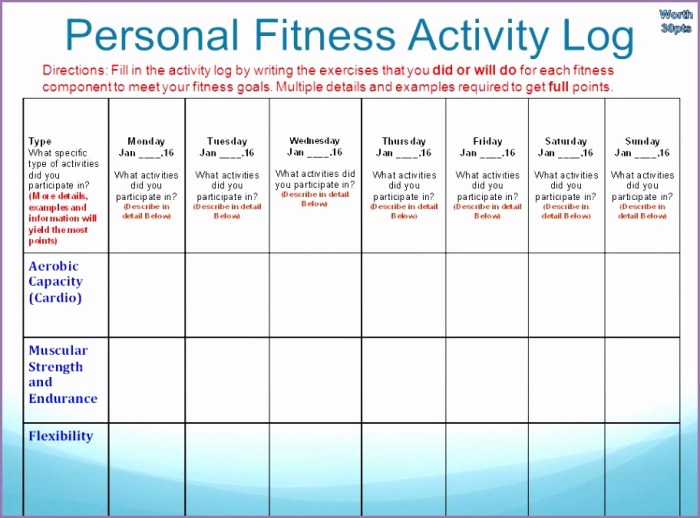
Now that you understand your fitness goals and have assessed your physical condition, it’s time to design a personalized fitness plan. A well-structured plan will guide you towards your goals while ensuring your safety and progress.
Creating a Personalized Fitness Plan Template
A personalized fitness plan template can help you organize your workouts and track your progress. Here’s a sample template:
Exercise Frequency and Duration
- Frequency:How many days a week you’ll exercise. For beginners, starting with 2-3 days a week is recommended, gradually increasing to 4-5 days as you build endurance.
- Duration:The length of each workout session. Aim for 30-60 minutes per session, including warm-up and cool-down.
Types of Exercises
- Cardiovascular Exercise:Activities that elevate your heart rate and improve cardiovascular health, such as running, swimming, cycling, and dancing.
- Strength Training:Exercises that build muscle mass and strength, using weights, resistance bands, or your own body weight.
- Flexibility Exercises:Activities that improve range of motion and flexibility, such as stretching, yoga, and Pilates.
Intensity Levels
- Light Intensity:You can easily hold a conversation while exercising.
- Moderate Intensity:You can talk, but you can’t sing.
- Vigorous Intensity:You can only speak a few words at a time.
Rest and Recovery
- Rest Days:Allow your body time to recover between workouts. Schedule 1-2 rest days per week.
- Active Recovery:On rest days, engage in light activities like walking, stretching, or yoga to promote blood flow and recovery.
Training Principles
Incorporating training principles into your plan can enhance your results and prevent plateaus.
Progressive Overload
This principle states that you need to gradually increase the demands on your body to stimulate further growth and adaptation. You can achieve progressive overload by increasing the weight, repetitions, sets, or duration of your workouts.
Example:If you can lift 10 pounds for 10 repetitions, gradually increase the weight to 12 pounds or the repetitions to 12.
Periodization
Periodization involves strategically varying your training volume, intensity, and frequency over time to maximize gains and minimize risk of injury. This approach typically involves phases of high-intensity training followed by phases of lower intensity, allowing for rest and recovery.
Example:A common periodization model includes a bulking phase (high volume and intensity), a cutting phase (lower volume and intensity), and a maintenance phase (moderate volume and intensity).
Exercise Examples
Here are some examples of exercises for different muscle groups and fitness levels:
Cardiovascular Exercises
- Beginner:Walking, jogging, swimming, cycling.
- Intermediate:Running, swimming laps, cycling hills.
- Advanced:Sprint intervals, HIIT workouts, long-distance running.
Strength Training Exercises
- Upper Body:Push-ups, pull-ups, bench press, rows, bicep curls, tricep extensions.
- Lower Body:Squats, lunges, deadlifts, calf raises, hamstring curls.
- Core:Plank, crunches, Russian twists, leg raises.
Flexibility Exercises
- Stretching:Static stretches held for 30 seconds, dynamic stretches like arm circles and leg swings.
- Yoga:Improves flexibility, strength, and balance.
- Pilates:Focuses on core strength and flexibility.
Balancing Strength Training, Cardiovascular Exercise, and Flexibility
A well-rounded fitness plan should incorporate all three components: strength training, cardiovascular exercise, and flexibility.
- Strength Training:Builds muscle mass and strength, improves metabolism, and helps with weight management.
- Cardiovascular Exercise:Improves heart health, increases endurance, and burns calories.
- Flexibility:Improves range of motion, reduces risk of injury, and promotes relaxation.
Incorporating Nutrition for Optimal Results
Your diet plays a crucial role in supporting your fitness goals. It fuels your workouts, aids in muscle recovery, and contributes to overall well-being. By understanding the relationship between nutrition and fitness, you can optimize your results and achieve your desired physique.
Creating a Balanced Diet
A balanced diet provides your body with the essential nutrients it needs to function optimally. It should consist of a variety of foods from all food groups, including fruits, vegetables, whole grains, lean proteins, and healthy fats. This ensures you get a diverse range of vitamins, minerals, and fiber.
- Fruits and Vegetables:Aim for at least five servings per day. These are rich in vitamins, minerals, antioxidants, and fiber, which support overall health and help regulate blood sugar levels.
- Whole Grains:Choose whole grain bread, pasta, rice, and cereals over refined grains. They provide more fiber and nutrients, promoting satiety and digestive health.
- Lean Proteins:Include sources like chicken, fish, beans, lentils, tofu, and eggs in your diet. Protein is essential for muscle growth and repair.
- Healthy Fats:Incorporate sources like avocados, nuts, seeds, and olive oil. These provide essential fatty acids, which are vital for hormone production and cell function.
The Importance of Hydration
Water is essential for optimal performance and recovery. It helps regulate body temperature, transports nutrients, and removes waste products. Dehydration can lead to fatigue, muscle cramps, and decreased performance.
- Hydration During Exercise:Drink water before, during, and after workouts to replenish fluids lost through sweat.
- Hydration for Recovery:Continue to drink water throughout the day to aid in muscle recovery and overall well-being.
Healthy Meal Plans and Snack Options
Here are some examples of healthy meal plans and snack options for different fitness levels:
For Beginners
- Breakfast:Oatmeal with berries and nuts
- Lunch:Salad with grilled chicken or fish
- Dinner:Baked salmon with roasted vegetables
- Snacks:Fruits, yogurt, nuts, or trail mix
For Intermediate Level
- Breakfast:Smoothie with protein powder, fruit, and spinach
- Lunch:Quinoa bowl with grilled chicken, vegetables, and avocado
- Dinner:Chicken stir-fry with brown rice
- Snacks:Greek yogurt with fruit, protein bars, or hard-boiled eggs
For Advanced Level
- Breakfast:Scrambled eggs with whole grain toast and avocado
- Lunch:Tuna salad with whole grain crackers
- Dinner:Steak with sweet potato and asparagus
- Snacks:Protein shakes, nuts, or seeds
The Role of Macronutrients
Macronutrients are essential for fueling exercise and muscle recovery. They include:
- Protein:Essential for muscle growth and repair. Aim for 0.8-1.2 grams of protein per kilogram of body weight per day.
- Carbohydrates:The primary source of energy for your body. Choose complex carbohydrates, such as whole grains, fruits, and vegetables, over simple carbohydrates, such as sugary drinks and processed foods.
- Fats:Provide energy and support hormone production. Choose healthy fats, such as those found in avocados, nuts, seeds, and olive oil.
Monitoring Progress and Making Adjustments
It’s crucial to track your progress to ensure your fitness plan is effective and to make necessary adjustments along the way. Regularly monitoring your progress allows you to stay motivated, identify areas for improvement, and celebrate your achievements.
Tracking Progress
Tracking your progress helps you understand how your body is responding to your fitness plan and allows you to make informed adjustments. Here are some effective methods:
- Fitness Trackers:Wearable fitness trackers can monitor your steps, heart rate, sleep patterns, and calories burned. They provide valuable insights into your daily activity levels and can help you stay accountable.
- Journals:Maintaining a fitness journal is a simple yet powerful tool. Record your workouts, including exercises, sets, reps, weight, and how you felt during and after each session. This allows you to track your progress over time and identify any patterns.
- Photographs:Taking progress photos at regular intervals can be a motivating way to visualize your physical changes. Compare photos taken at the beginning of your fitness journey with those taken later to see how your body composition has changed.
Regular Self-Reflection and Adjustments
Regular self-reflection is essential for ensuring your fitness plan aligns with your goals and that it’s working effectively.
- Review Your Goals:Regularly reassess your fitness goals to see if they still resonate with you. As you progress, your goals may evolve, so it’s important to stay aligned with your aspirations.
- Analyze Your Progress:Evaluate your progress data, whether from fitness trackers, journals, or photos. Identify areas where you’re excelling and areas that need improvement.
- Make Adjustments:Based on your self-reflection and progress analysis, adjust your fitness plan as needed. This might involve increasing the intensity, duration, or frequency of your workouts, modifying exercises, or incorporating new activities.
Addressing Plateaus
Hitting a plateau is a common experience in fitness. It’s a period where you stop seeing significant progress despite consistent effort.
- Identify the Cause:Plateaus can occur due to various factors, such as overtraining, lack of sufficient rest, inadequate nutrition, or a plateau in your workout routine.
- Strategies to Break Through:
- Increase Intensity:Gradually increase the intensity of your workouts by adding more weight, resistance, or speed.
- Change Your Routine:Introduce new exercises or modify your current ones to challenge your muscles in different ways.
- Increase Volume:Gradually increase the duration or frequency of your workouts.
- Improve Nutrition:Ensure you’re consuming enough calories and macronutrients to support your fitness goals.
- Prioritize Rest:Adequate rest is crucial for muscle recovery and growth. Make sure you’re getting enough sleep and incorporating rest days into your schedule.
Staying Motivated and Consistent
Maintaining motivation and consistency is key to achieving your fitness goals.
- Set Realistic Goals:Set achievable goals that are challenging but not overwhelming.
- Find a Workout Buddy:Having a workout partner can provide support, accountability, and motivation.
- Reward Yourself:Celebrate your achievements and milestones with small rewards to stay motivated.
- Track Your Progress:Seeing your progress can be a powerful motivator.
- Be Patient:Remember that fitness is a journey, not a sprint. Be patient with yourself and trust the process.
The Importance of Rest and Recovery
Rest and recovery are not optional extras in your fitness journey; they are essential components for achieving your goals and preventing injuries. Just as your muscles need time to rebuild after a workout, your body needs time to rest and repair itself.
This is where rest and recovery come in.
The Role of Sleep in Muscle Recovery and Overall Health
Sleep plays a vital role in muscle recovery and overall health. During sleep, your body releases growth hormone, which helps repair and rebuild muscle tissue damaged during exercise. Sleep also helps regulate your hormones, improves your mood, and boosts your immune system.
Aim for 7-9 hours of quality sleep each night to optimize your recovery and overall well-being.
The Importance of Active Recovery Activities
Active recovery activities, such as light stretching, walking, or yoga, can help improve blood flow, reduce muscle soreness, and promote flexibility. These activities are less intense than your regular workouts, but they still help your body recover and prepare for your next training session.
Tips for Incorporating Rest Days into a Fitness Plan
Incorporating rest days into your fitness plan is crucial for preventing overtraining and injuries. Here are some tips for scheduling rest days:
- Schedule at least one rest day per week, and consider adding more rest days if you’re training intensely.
- Listen to your body and take rest days when you need them. If you’re feeling tired, sore, or experiencing any pain, take a day off.
- Use rest days for activities that you enjoy, such as reading, spending time with loved ones, or getting a massage.
Strategies for Managing Stress and Preventing Burnout
Stress can negatively impact your fitness goals and overall health. Here are some strategies for managing stress and preventing burnout:
- Practice relaxation techniques, such as deep breathing, meditation, or yoga.
- Get enough sleep, eat a healthy diet, and exercise regularly.
- Set realistic goals and avoid overtraining.
- Take breaks from your workout routine when needed.
- Seek professional help if you’re struggling to manage stress or burnout.
Integrating Physical Fitness with Overall Wellness: How To Create A Personalized Physical Fitness Plan
Physical fitness is not merely about achieving a sculpted physique or running a marathon. It’s about cultivating a holistic well-being that encompasses mental, emotional, and physical aspects of your life. By incorporating physical activity into your routine, you can unlock a cascade of benefits that positively impact various facets of your health.
The Interconnectedness of Wellness
A robust physical fitness plan can contribute to a healthier lifestyle overall. When you engage in regular exercise, your body releases endorphins, which have mood-boosting effects. This can lead to reduced stress levels, improved sleep quality, and enhanced cognitive function.
Moreover, physical activity can help manage chronic conditions such as heart disease, diabetes, and obesity.
Activities Promoting Holistic Wellness, How to create a personalized physical fitness plan
A holistic approach to wellness often involves incorporating activities that nurture both the mind and body.
- Yoga: This ancient practice combines physical postures with deep breathing techniques, promoting flexibility, strength, and stress reduction.
- Meditation: Regular meditation can calm the mind, reduce anxiety, and improve focus.
- Spending Time in Nature: Immersing yourself in natural environments can have restorative effects on mental and emotional well-being.
Benefits of Mindfulness Practices
Mindfulness practices, such as yoga and meditation, can be seamlessly integrated into a fitness routine. By incorporating these practices, you can cultivate a greater awareness of your body’s sensations and emotions, leading to:
- Improved Body Awareness: Mindfulness enhances your connection to your body, enabling you to better understand its signals and needs.
- Enhanced Performance: Mindfulness can help you focus on the present moment, leading to improved performance in your workouts.
- Reduced Stress and Anxiety: By calming the mind and promoting relaxation, mindfulness can help manage stress and anxiety.
Concluding Remarks
Crafting a personalized physical fitness plan is a journey of self-discovery and empowerment. It’s about embracing your individuality and forging a path that aligns with your goals and aspirations. By taking the time to understand your body, set realistic goals, and design a program that suits your lifestyle, you’ll not only achieve your fitness objectives but also unlock a deeper sense of well-being.
Remember, consistency and patience are key, and every step you take, no matter how small, brings you closer to a healthier, stronger, and more fulfilling you.
General Inquiries
How often should I exercise?
The frequency of exercise depends on your fitness level and goals. A general recommendation is to aim for at least 150 minutes of moderate-intensity aerobic activity or 75 minutes of vigorous-intensity aerobic activity per week. You can also include strength training exercises at least twice a week.
What if I can’t afford a personal trainer?
While a personal trainer can be beneficial, it’s not essential. You can find many resources online and in libraries that provide guidance on exercise and nutrition. You can also consult with your healthcare provider for personalized advice.
What if I hit a plateau in my progress?
Plateaus are common in fitness journeys. To break through a plateau, consider adjusting your workout routine, increasing the intensity, or adding new exercises. It’s also important to ensure you’re getting enough sleep and eating a balanced diet.


More Stories
Physical Fitness Tips for Busy Professionals: Stay Healthy, Stay Strong
How to start regular exercise for beginners: A Beginners Guide to Health and Wellness
Physical fitness routines for building muscle mass: Effective Strategies for Muscle Growth